The Anime
Soundtrack
There are some songs in Sonny Boy, and they're quite good. Though, Sonny Boy has one of the sparsest soundtracks in anime. The way it's used so sparsely makes each moment with a soundtrack that much more impactful. There's nothing more for me to say that wouldn't downplay how good it is.
My favorite track, Lightship isn't even on Spotify, so I can't embed it here. It's a track that plays during (spoilers) the preparation of Nozomi's funeral. With the horns and all the instrumental pieces, it portrays her death and the sadness around it in such a grand manner. It's a track that really captures the mood of the moment, and it really adds to the emotional impact of the scene. I can't say enough good things about it. It's a masterpiece.
Thoughts
Have you ever had no intention to cry, set feel your soul has been crushed? Sonny Boy is an anime that I didn't really understand while watching. It's an anime that makes you feel things you've never felt, and shows you things you've never seen. After finishing it, I can't say I fully understand, either. I don't think I have to. You go through these incredibly confusing scenes, moment after moment. Sometimes you understand, sometimes you don't. This anime feels incredibly personal, so intimate, like you're living in the same story. Yet you know you're just an observer. Obviously that seems like any other piece of media, but for some reason this one feels different. It's like there's so much meaning, yet you don't know what it is. It's wearing its heart on its sleeve, but you don't know what it's saying. Watching this anime felt like talking to a stranger.
The characters in this anime are so incredibly complex, yet how complex they are is something that is left so vague, up for interpretation. The timeframe that the story takes place in makes you feel like you're growing up with them. You feel every character development, every interaction, every silent moment, and yet sometimes it feels like nothing has changed. They're stuck living in a world of many possibilities, yet it feels so mundanely absurd to them. Of course, they're in stasis, but can you really say that nothing has changed?
I can't say I understand any of the characters fully. Yet, I know that this story is a coming of age story. Even if they're middle schoolers, it feels like an adult coming of age story. About the rules in the world, leaving behind what once was. It's a story about responsibility, triumph, and loss. I won't go too much into the story, but every story beat certainly moved my heart. That climax at the sixth episode certainly surprised me. I didn't expect their solution to be that easy, but it still surprised me nevertheless. More than that, it affected the story in such an incredible way. It just felt so different after that.
Certainly, one of the most important aspects of this anime is the multiverse aspect. It's explored so often by the anime, that it just feels like another extension to the world. Each world felt so big, so expansive. That's not just due to the worlds themselves, but also due to the people living inside of it. I got to see dystopian worlds, simple societies, and so many more desolate worlds. Each and every world just felt so "lived" in. Yeah, that's what you get when you have time dilation. And yet the multiverse aspect wasn't really explained upon. I'm glad the story didn't suddenly demystify at the end.
Sonny Boy's escape sequence slash ending, displayed by the last 2 episodes, is one of the best I've ever watched. Heavy spoilers incoming. Before they escaped, I enjoyed how they dealt with Nozomi's death. It was beautiful, I loved the beach scene they had after the funeral. More than that, I really enjoyed how they built the vehicle of their escape, they used a true copy of the Saturn V rocket in order to go to space. I didn't see that coming at all. Even better, after they escaped, I guess they enter this gondola-thing that accelerated to the speed of light. They use it to go to the Light that Nozomi saw. Together, Nagara and Mizuho observed it to collapse the many possibilities of the future, creating one that they wanted to live in. It's beautiful. It reminds me a bit of Outer Wilds' ending. I don't think I'll get that sequence out of any other piece of media ever again.
In the end, Nagara and Mizuho's life went back into mundanity again. The world around them changed. They were living in the world they wanted to live in. No one remembers what happened, except for them. They have to live with that fact forever. They just have to live on, learning and remembering what had happened before. Wearing their hearts on their sleeve, keeping Nozomi's compass and remembering the two-year recess they take on their futures. That's what Nozomi would've wanted. It's heartbreakingly beautiful.
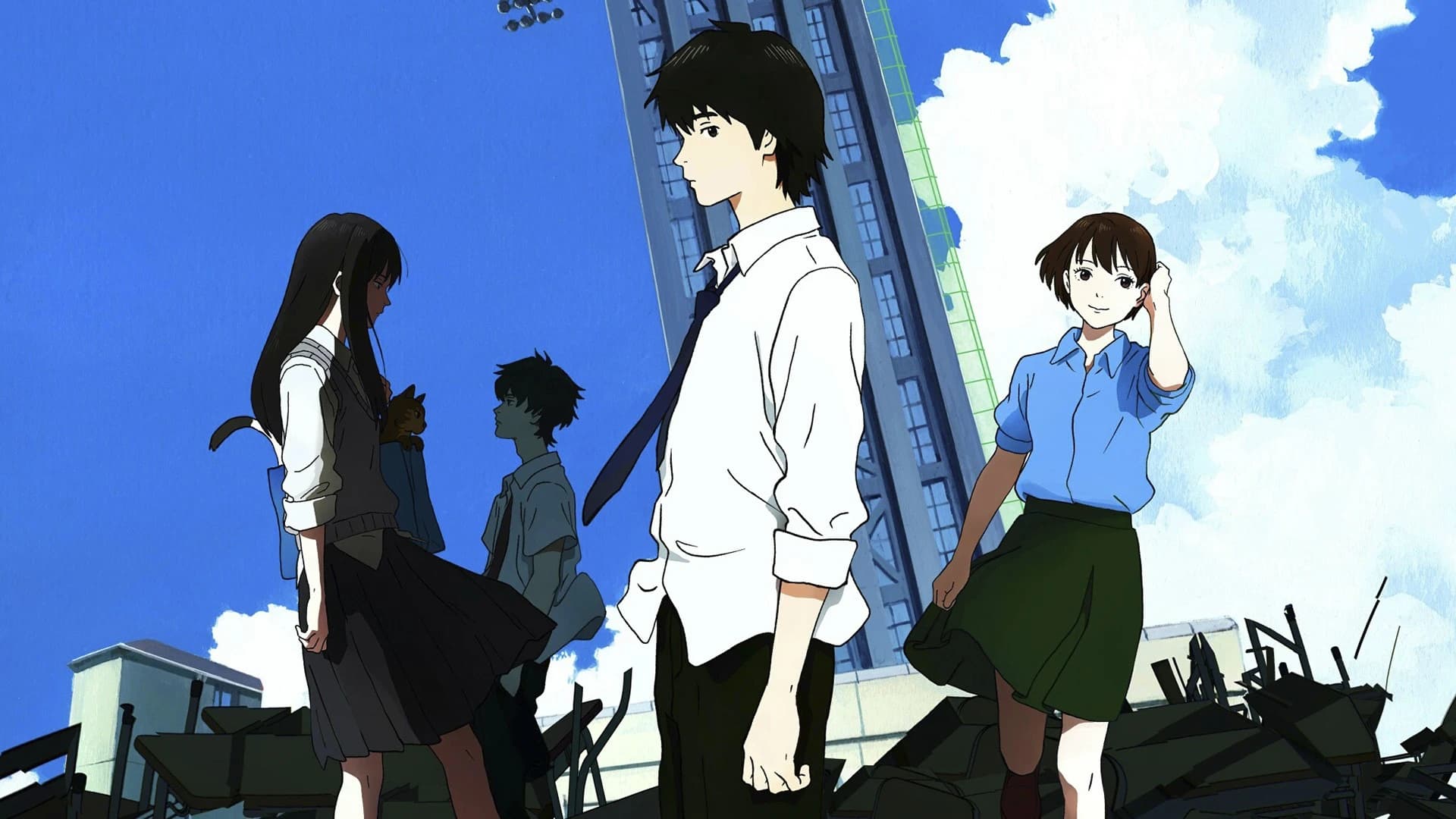
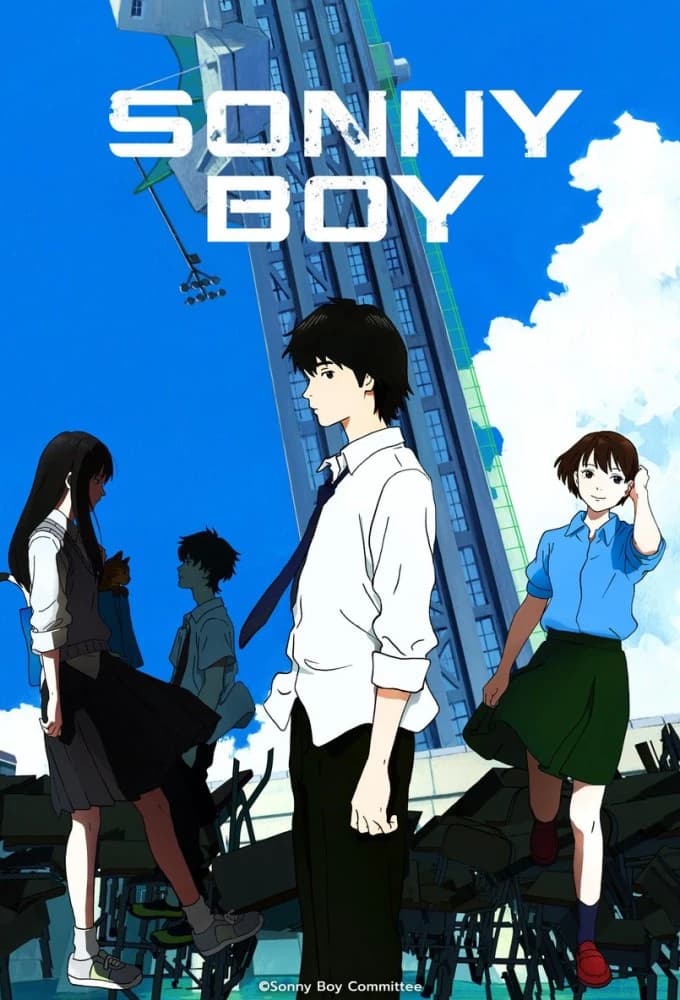
I will say that the visuals in Sonny Boy are something you would only see in contemporary media. A lot of it's very unique, yet there are still familiar aspects you would see in other anime. Every scene is vibrantly full of emotion. I think I could take a screenshot of any frame and use it as a wallpaper. More than beautiful, the "absurd" parts are also incredible. They feel alien, terrifying, almost filling me with dread. The visuals of Sonny Boy really elevate the worldbuilding to the point that it is essentially part of the it.
Now, a more personal analysis. This anime truly felt like a coming of age story. It's paced like someone's (me) high school life. At first it was confusing, so many things were happening all at once. So many revelations were coming in so fast that I couldn't catch up. The rules of the world were already set, and I missed the starting gun. I slowly grasped the situation. Despite it all, you must keep going.
Sonny Boy is the Outer Wilds of anime. Anyone who hasn't watched it can and should get start it, but I highly recommend starting it without spoilers. I could go on and on and write thousands of words for every episode, but that would include a retelling of the story, which would be boring. Overall, give this anime a Gem-Gem 10/10. It's a once in a lifetime masterpiece. It's a tour de force of contemporary art.
No matter how well I've come to understand the psychology of this universe, I can't do anything more for a friend who's crying but sit next to them.
Post-mortem
To me, Sonny Boy is about adulting. I feel very strongly about this opinion. Specifically at the start it feels like the characters are at the end of their adolescence. They're sent to an unknown world with unknown rules, much like the adult world. They also have powers, which to me are an analogy to the talents of people. Of course, the real value the powers have depends on the person who wields them. I genuinely think that's an an analogy to real life.
The analogy of this anime being adolescence I feel is even strengthened by the character themes, where Nagara has to learn to stand up on his own two feet supported by Nozomi. While someone like Asakaze can only stand with the help of others around him, signified by his total obedience to the fake teacher. Only Nagara can stay true to himself and wield his power properly. This is even shown when Nozomi dies, Asakaze can't act on his own true self's thoughts because he doesn't know who he really is. Nagara, on the other hand is able to do so because he can stand up on his own two feet. He can even help others stand on their own too, as shown in the support he gives to Nozomi and Mizuho when they're down.
What seals this message for me is the sixth episode, where they try to return to the real world by copying everything else into their world. It doesn't work. This really feels like a strong analogy to nostalgia. No matter how much you try to live in a memory, it won't ever turn into reality. So, the characters move on into their own paths, much like adulthood. There are people who choose to go with the teacher, then with the Ark, and then there are the ones who still want to go home, of course. To me, the people who go with the teacher are like those who have given up, and instead choose to live simple lives following simple rules. The Ark people on the other hand are like people who have given up, but still want to live interesting lives in an extremely confusing world. Finally, Nagara and his friends are the ones who want to take action in their lives, not living by the rules but finding a future that they can take responsibility of. I think that's commendable and can be taken into real life principles.
There are multiple plot points that can be related to adulthood and intra/interpersonal relationships, like the Baseball Monkey Arc, the Sou Seiji arc, and the Yamabiko episode. But after reflecting on the anime for a while, I feel there is one true theme really driven into the show (this also relates to adulthood), which is regarding the meaning of life. Let's talk about death, first, though. There is no true "death" in the world of Sonny Boy. Rather, when a character dies, they turn into a static object; an item of sorts. To me, this signifies death as more than just sickness and pestilence. Death is the inability to do. To do is to be, after all. This is even proven by Rajdhani's story about the "inventor" of death succumbing to a life of apathy. But, what is the relationship between life and death? To me, Sonny Boy's story is about life. What is the point of life if you don't stay true to your own true self? At the start, Nagara's a troubled kid with no one to lean on, not even himself. He doesn't even bother doing anything about his situation because he just doesn't care anymore. You can see it when he doesn't even bother helping a dying bird. Even though it's probably going to die already, Nozomi asks the question whether it's right to abandon someone because you've been abandoned. What I'm trying to say is: The birds in Sonny Boy are Nagara. The dead bird in the real world, the seagull in the This World, and the juvenile bird in the finale. They're all him. He starts off completely abandoned, then being shown the Light by Nozomi, and finally he's in the real world, having had his life changed by Nozomi. Throughout the course of the story, he learns to care about the world not just because he cares about the people around him, but because he cares about himself. This is the one true message of the story. The one about taking action of your own life, taking it by its horns and not straying from the Light. And that Light isn't necessarily God, Satan, or any kind of figure, destination, or religion. It's you being true to yourself. Because despite everything, it's still you. And you do it not because you owe it to yourself, but you just do it because you do. Thanks, Sonny Boy.